Celebs
Gitanjali Angmo Urges Bollywood to Rediscover India’s Epic Stories

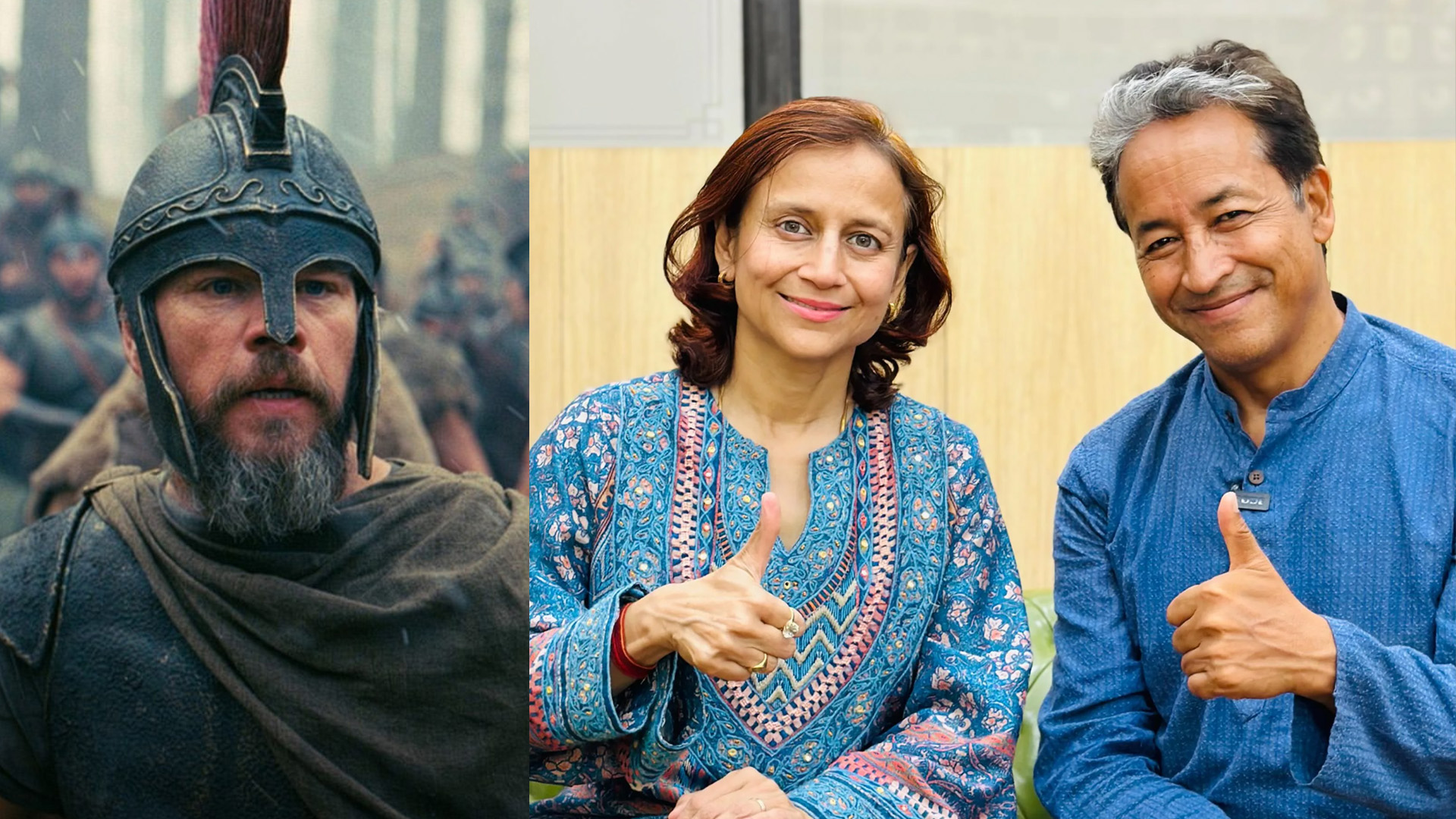
- Gitanjali Angmo praised Christopher Nolan’s The Odyssey after watching the film and recalling an earlier meeting with the filmmaker in New York in 2024.
- She said the film’s themes resonate with Indian storytelling traditions, including dharma, destiny, exile and the hero’s journey.
- Angmo urged Bollywood to adapt India’s epic literature with “scale, sensitivity and intellectual depth.”
- She argued that cinema should serve as more than entertainment, describing it as a powerful medium that shapes minds.
- Her comments come amid continued public discussion surrounding Sonam Wangchuk’s recent education reform campaign and Bollywood’s response to it.
Gitanjali Angmo, social entrepreneur and wife of activist Sonam Wangchuk, has called on Bollywood to revisit India’s rich tradition of epic storytelling after watching Christopher Nolan’s The Odyssey. Sharing her reaction on X on August 2, she described the film as a “surreal” experience and said it demonstrated how timeless mythological narratives can be brought to the screen with depth and ambition.
A call for deeper storytelling
Angmo said watching The Odyssey reminded her of an unexpected meeting with Nolan in New York in 2024, when the project was still a topic of conversation.
Reflecting on the film, she wrote that its themes “feel so familiar to the Indian imagination,” citing the hero’s journey, dharma, destiny, exile, temptation, homecoming and the transformation of the individual through adversity.
She argued that India possesses a vast reservoir of stories capable of receiving similar cinematic treatment.
“India is sitting on a treasure-house of such epics. Imagine bringing them to cinema with scale, sensitivity and intellectual depth.”
Angmo also stressed that cinema has a broader cultural responsibility, adding that it “is more than entertainment” and suggesting Bollywood should “rediscover its role as one of our most powerful classrooms.”
Why The Odyssey resonated
Christopher Nolan’s latest film adapts Homer’s ancient Greek epic and marks the filmmaker’s first large-scale mythological feature. The production follows Odysseus’ journey home after the Trojan War and was filmed entirely using IMAX’s largest film format.
The film features an ensemble cast including Matt Damon, Tom Holland, Robert Pattinson, Zendaya, Anne Hathaway and Lupita Nyong’o. Veteran actor Kamal Haasan also recently praised the film, calling it a work that “belongs to the ages” and encouraging audiences to watch it.
Comments arrive amid wider public debate
Angmo’s remarks come weeks after Sonam Wangchuk concluded a 26-day hunger strike at Delhi’s Jantar Mantar, where he demanded greater accountability and reforms in India’s examination system following the NEET paper leak, along with the resignation of then Union Education Minister Dharmendra Pradhan.
The protest also revived discussion over Bollywood’s engagement with Wangchuk’s activism. During that period, some observers expected actor Aamir Khan to publicly support him because of the long-held perception that 3 Idiots drew inspiration from Wangchuk’s life.
Speaking at the British Film Institute, however, Aamir Khan rejected that claim, saying neither he nor director Rajkumar Hirani and writer Abhijat Joshi knew Wangchuk while making the film. He nevertheless praised Wangchuk’s work, saying it deserved respect regardless of any connection to 3 Idiots.
Soon afterward, an older video showing Aamir meeting Wangchuk in 2008 resurfaced online, prompting debate on social media over the actor’s comments. The video led to differing public interpretations, but no further official clarification has been reported.
What happens next
Angmo’s post has renewed discussion about the direction of mainstream Hindi cinema, particularly whether Indian filmmakers should draw more extensively from the country’s literary and mythological heritage. Her remarks have also added another dimension to the broader conversation surrounding cinema’s cultural influence and its relationship with contemporary public discourse.