Celebs
Why Gangsters Are Targeting Bollywood Stars for Extortion

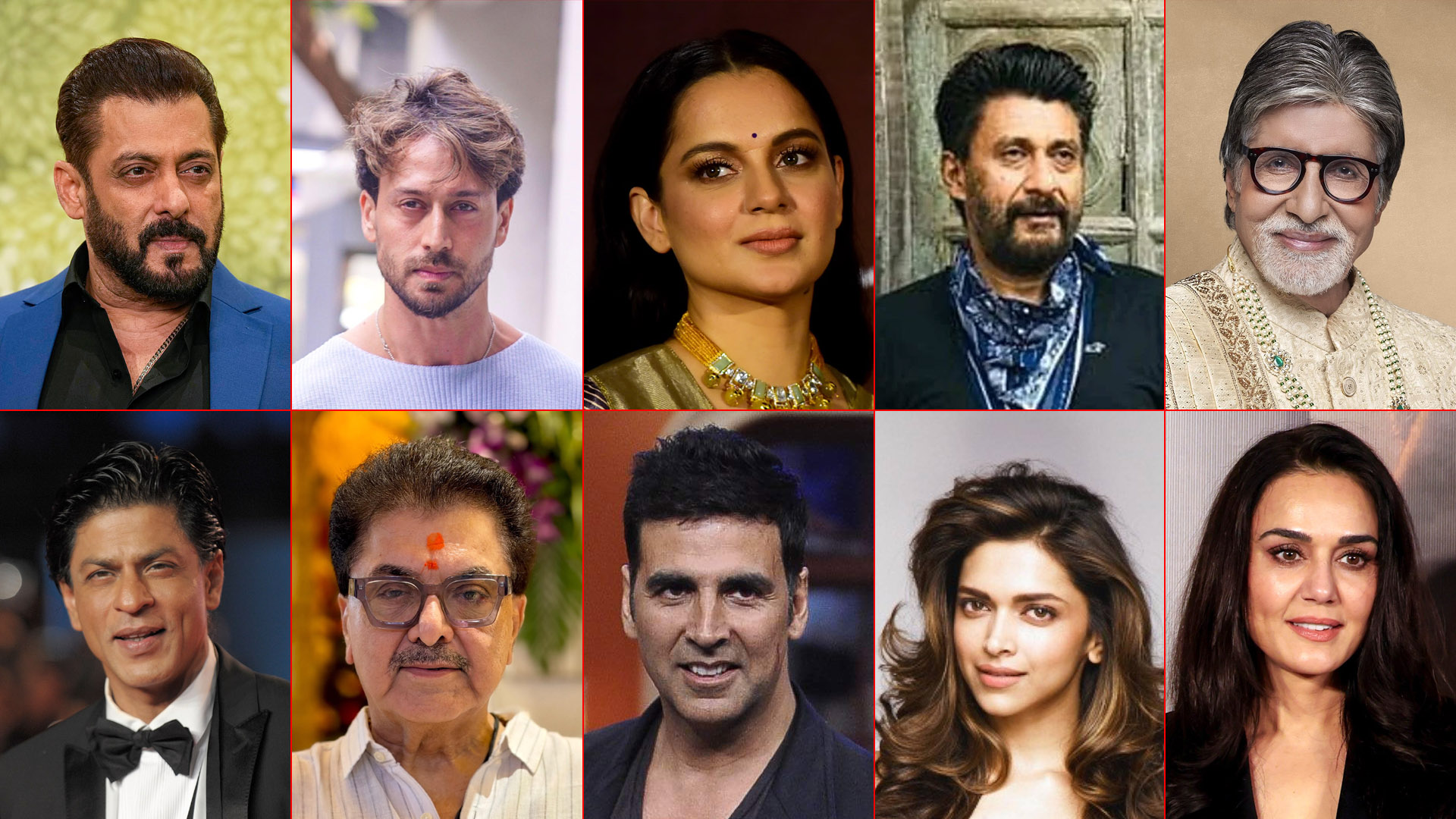
- The October 18, 2026, shooting targeting Tiger Shroff in Mumbai has renewed concerns about the safety of Bollywood celebrities.
- The attack follows shootings, death threats and extortion demands involving actors, singers and other entertainment figures in India and Canada.
- Lawrence Bishnoi and individuals claiming links to his network have been associated with several attacks, although the available accounts do not establish the full chain of command behind every incident.
- One explanation for the targeting of celebrities is that attacks on prominent stars generate publicity and help criminal groups build notoriety while pressuring victims to pay extortion demands.
- Previous confrontations between Mumbai’s underworld and the film industry involved demands for loyalty, interference in film financing and threats against actors and producers.
- The motives behind the latest wave of violence, and how alleged gang leaders can coordinate criminal activity while imprisoned, remain unresolved questions in the supplied reporting.
The October 18, 2026, shooting targeting actor Tiger Shroff in Mumbai has renewed concerns about a resurgence of gangster violence against Bollywood celebrities, with recent attacks, death threats and extortion demands raising questions about the motives of criminal networks and their ability to operate across borders.
According to accounts of the incident, unidentified men on a motorcycle opened fire at Shroff’s SUV. A separate account said two attackers attempted to shoot him at close range but apparently failed when one of their guns jammed. The actor survived the incident.
The attack follows a series of incidents involving some of India’s most recognisable entertainment figures, including shootings outside Salman Khan’s residence and filmmaker Rohit Shetty’s home, threats against actor Ranveer Singh, and attacks involving singers and other celebrities. In several cases, individuals claiming links to the Lawrence Bishnoi gang have taken responsibility or issued threatening messages.
The pattern has prompted questions about whether the violence is primarily intended to extract money, build criminal reputations or punish celebrities for their alleged associations with particular individuals. The available accounts do not establish a single motive for every attack.
Celebrity attacks offer criminal groups national visibility
One explanation for the targeting of Bollywood stars is the publicity their names can generate.
An analysis published by Open argues that the killing of singer Sidhu Moosewala in 2022 helped bring Lawrence Bishnoi and associated criminal networks to wider public attention. The subsequent shooting outside Salman Khan’s residence in April 2024 expanded that visibility, making the gang’s name familiar to a much larger audience.
The same analysis describes attacks on celebrities as a branding strategy: a criminal group can gain notoriety by targeting a well-known personality, potentially strengthening its ability to intimidate other people and demand money.
The October shooting involving Shroff represents a further escalation in this pattern, the analysis argues, because bullets were reportedly fired into the actor’s vehicle rather than merely outside a residence.
That interpretation is not proof of the motives behind the attack. The circumstances surrounding the Shroff shooting, including who ordered it and why, remain unclear in the supplied accounts.
The incidents nevertheless show that the threats facing entertainment figures extend beyond online intimidation. Recent cases have involved gunfire at homes, businesses and other premises associated with celebrities, alongside demands for money delivered through messaging platforms.
A growing list of shootings and threats
The shooting at Shroff’s vehicle follows several incidents reported over the past three years.
In November 2023, gunfire was reported outside singer and actor Gippy Grewal’s residence in Vancouver, Canada. The Lawrence Bishnoi gang claimed responsibility, citing Grewal’s association with Salman Khan. Grewal disputed the significance of that connection, saying he had met Khan only twice.
In April 2024, two men on a motorcycle opened fire outside Khan’s Galaxy Apartments residence in Mumbai’s Bandra neighbourhood. Khan was inside the building and was not injured. The incident was followed by arrests, although the supplied commentary says investigators learned little about the wider operation.
In September 2024, gunshots were fired at singer AP Dhillon’s residence on Canada’s Vancouver Island. A network associated with the Bishnoi gang claimed responsibility, and a social media post also threatened the singer.
The incidents continued in 2025. In September, gunmen opened fire outside actor Disha Patani’s family home in Bareilly, Uttar Pradesh. The report said her family members were inside the house at the time.
In November, two motorcycle-borne attackers fired multiple rounds outside singer Guru Randhawa’s gym. The Bishnoi gang subsequently claimed responsibility through social media posts and an audio message, threatening the singer over his alleged closeness to Khan. Four suspects were arrested in June 2026 following police operations and encounters connected with the case, according to the supplied reporting.
Kapil Sharma’s restaurant, Kap’s Cafe, in Canada was targeted in three separate shooting incidents between July and October 2025. The supplied account said officials linked the accused to Goldy Brar, a gangster associated with the Bishnoi network.
In February 2026, gunfire struck the premises of filmmaker Rohit Shetty’s residence in Mumbai’s Juhu area. Police said at least five rounds were fired at around 12.45 am towards the first floor of the nine-storey building, with one bullet shattering the glass of a gym inside the premises. The Bishnoi gang subsequently claimed responsibility, describing the attack as a “small trailer”.
Other reported incidents involved threats rather than shootings. In July 2026, actor Aamir Khan reportedly received a threat through a social media post and voice clip allegedly linked to the gang. A member of Ranveer Singh’s staff reportedly received an audio message demanding more than Rs 10 crore. Police suspected the involvement of individuals linked to the Bishnoi network.
The supplied accounts do not establish that every incident was directed by the same person or coordinated as part of a single operation.
How Bollywood’s relationship with the underworld changed
The film industry’s relationship with organised crime predates the current wave of attacks.
During the 1970s, Hindi cinema frequently drew on stories about outlaws and bandits. Films such as Ganga Jamuna and Sholay helped popularise the genre. A different strand emerged with Deewaar, written by Salim-Javed and released in 1975, which shifted the criminal narrative towards Mumbai’s docks and smuggling networks.
The film was widely understood within the industry to have been loosely inspired by the life of Haji Mastan, a smuggler and gangster who cultivated relationships with film personalities and reportedly financed movies.
That relationship deepened as later underworld figures gained influence. Dawood Ibrahim hosted film stars in Dubai, while criminal networks became involved in film financing, music and video distribution. Movies such as Nayakan, Dayavan and Satya explored the world of organised crime, sometimes drawing on real gangsters.
The association also brought coercion. Gangsters demanded loyalty from actors, pressured producers over distribution rights and threatened stars who refused to cooperate or were perceived as close to rival criminal groups.
The relationship became a matter of public scrutiny following the 1993 Mumbai bombings. Actor Sanjay Dutt was arrested in connection with the case and convicted under the Arms Act. He had said he obtained an assault rifle to protect his family, while police maintained that the weapon had come from underworld associates.
The crackdown that followed weakened the underworld’s influence over the film industry, according to the supplied commentary. The latest attacks suggest that celebrity intimidation has returned, although the methods and apparent objectives differ from those of earlier decades.
Why the current wave is different
The present campaign appears less focused on controlling film production and more closely associated with extortion and publicity, according to the analysis in the supplied material.
One account argues that criminal groups have learned that attacking celebrities can quickly make their names nationally recognisable. That visibility can serve as a means of intimidation beyond the immediate victim.
Messages posted after some attacks have also referred to Salman Khan, with targets allegedly accused of being close to the actor. Other messages have invoked religious grievances as justification for violence.
These explanations remain claims made by the individuals or groups issuing the messages. The available material does not establish whether they reflect the actual motives behind the attacks or serve as convenient justifications.
The apparent use of young men recruited to carry out shootings also complicates efforts to identify those directing the violence. The supplied commentary describes attackers as low-level operatives who may have little knowledge of the people ordering a hit or the reasons behind it.
That assessment draws a comparison with the Mumbai underworld of the 1990s, when shooters could be replaced without necessarily disrupting the criminal networks behind them.
Questions over Lawrence Bishnoi’s prison custody
Lawrence Bishnoi’s alleged role in the attacks raises a separate question: how can a criminal network continue operating when its suspected leader is in prison?
The supplied reporting states that Bishnoi is being held at Sabarmati Jail in Ahmedabad, Gujarat. His brother Anmol, who was deported to India by US authorities in late 2025, is being held at Tihar Jail in Delhi.
Despite Bishnoi’s imprisonment, individuals claiming to act on behalf of his network have been associated with threats and attacks across India and Canada.
The commentary says police forces have complained that the Union Home Ministry, citing legal restrictions, has not permitted Bishnoi to be taken out of the Gujarat jail for questioning by other police forces about his alleged methods and motives.
The available material does not explain how the gang’s communications are managed from prison or establish the extent of Bishnoi’s direct involvement in each incident. His alleged position as the network’s leader therefore leaves significant questions about the chain of command unanswered.
The cases also raise questions about the effectiveness of investigations focused on the people who carry out shootings rather than the individuals suspected of commissioning them. Arrests and encounters involving alleged shooters have not, in the supplied accounts, produced a comprehensive explanation of the wider operations.
A threat extending beyond Bollywood
The reported attacks are not confined to actors or film sets. Singers, comedians and businesses associated with entertainment personalities have also been targeted, including properties in Canada.
That broader pattern suggests that the risks extend to people and businesses perceived to have connections with prominent celebrities. However, the supplied material does not establish a common motive or command structure for all the incidents.
For the film industry, the immediate challenge is dealing with threats that can escalate from messages and extortion demands to gunfire. For investigators, the unanswered questions concern who orders the attacks, how criminal networks communicate with operatives, and what connects individual incidents.
The shooting involving Tiger Shroff has brought those questions back into focus. Until the available evidence establishes who directed the attack and why, the precise motives behind the renewed violence against Bollywood figures remain unresolved.