Celebs
Dhanush, Lara Dutta Defend Sai Pallavi’s Warrior Sita in Ramayana

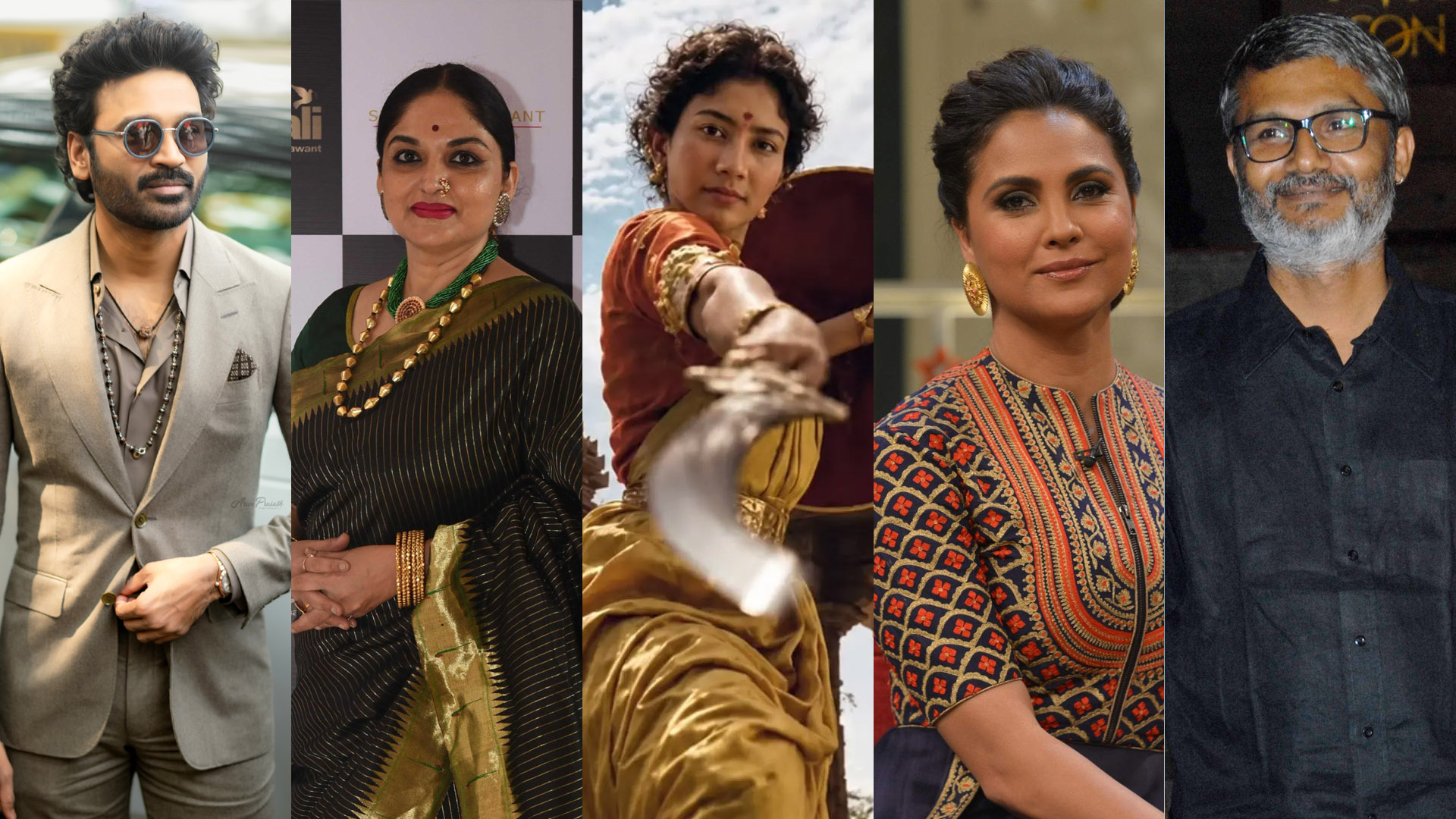
- Dhanush has publicly supported Sai Pallavi’s casting as Sita in Nitesh Tiwari’s Ramayana.
- Lara Dutta has defended the film’s portrayal of Sita as a warrior, arguing that the character’s strength is consistent with the film’s interpretation.
- Director Nitesh Tiwari has cited the Adbhuta Ramayana and Bilanka Ramayana while explaining the creative decision.
- Veteran actor Mukesh Khanna has criticised the depiction, arguing that it departs from Valmiki’s Ramayana.
- Indira Krishnan has also defended the film’s portrayal of its female characters.
- The film’s warrior-Sita interpretation has generated mixed reactions among viewers.
Sai Pallavi’s portrayal of Sita as a warrior in Nitesh Tiwari’s Ramayana has sparked debate among viewers, but several members of the film’s cast have come forward to defend the creative decision. Actor Dhanush has strongly backed Pallavi’s casting, while Lara Dutta has argued that depicting Sita as a woman capable of defending herself is not an unreasonable interpretation of the character.
The discussion centres on scenes showing Sita handling weapons and fighting demons alongside Rama, played by Ranbir Kapoor. While some viewers have questioned whether the depiction is consistent with their understanding of the epic, the film’s director and cast members have defended the approach by pointing to alternative versions of the Ramayana.
Dhanush calls Sai Pallavi the right choice for Sita
At an event for their upcoming film OM, Dhanush publicly expressed his support for Pallavi, dismissing the criticism surrounding her casting.
Speaking in Tamil, the actor praised her devotion, personality and acting abilities. He said, “There was a lot of noise around her playing the role of Sita. I don’t get it. She even prays during the gaps between shots. She has so much devotion to God. She has a pure heart. She’s beautiful and a great performer.”
He went on to make his support clear, declaring, “Even if you search across the whole of India, you won’t find another Sita like her.”
Pallavi, who was seated among the audience, smiled as Dhanush spoke about her.
His comments have received mixed reactions on X. Some users agreed with his assessment and praised the actress, while others maintained that she was not the right fit for the role. Criticism has also focused on her expressions in the film’s Jatayu sequence.
Lara Dutta explains the warrior portrayal
Lara Dutta, who plays Kaikeyi in the film, has also defended the decision to present Sita as a warrior.
Speaking to NDTV, Dutta argued that a princess of that era could plausibly have received training in weaponry and combat. She also pointed out that the epic exists in multiple versions, suggesting that viewers should remain open to different cinematic interpretations.
“You have to stop being so small-minded, you know, and also embrace the cinematic experience,” Dutta said.
Explaining her perspective, she said royal children, including daughters, could have been trained in both the arts and the use of weapons.
“So I think it’s not that far off or it’s not that far-fetched to think that Sita was also possibly very much trained in the art of warfare,” she added.
Dutta also referred to Sita’s 14 years in the forest, arguing that the character would not necessarily remain helpless in difficult situations.
“At some point, she will pick up something to defend herself,” she said.
In the film, Pallavi’s Sita is shown fighting demons alongside Rama and teaching combat skills to children and young villagers. These sequences have become a central point of disagreement among viewers.
Nitesh Tiwari cites alternative versions of the epic
Director Nitesh Tiwari has also responded to criticism of the warrior portrayal, citing the Adbhuta Ramayana and Bilanka Ramayana to explain the creative interpretation.
The makers have said that the characterisation draws on the Adbhuta Ramayana, which includes an account of Sita taking a fierce, Kali-like form to defeat Sahasra Ravana, a demon with a thousand heads.
However, the decision has not convinced everyone.
Veteran actor Mukesh Khanna has objected to the depiction, arguing that scenes showing Sita fighting demons depart from the version of the epic associated with Valmiki.
Khanna has questioned the filmmakers’ use of creative liberty in portraying a revered religious figure. He also expressed reservations about the explanation that the warrior interpretation was drawn from the Adbhuta Ramayana.
The disagreement reflects differing expectations about how a major mythological story should be adapted for cinema, particularly when filmmakers choose interpretations that may be less familiar to audiences.
Indira Krishnan also backs the film’s female characters
Indira Krishnan, who plays Ranbir Kapoor’s mother in the film, has also defended the portrayal of women in Ramayana.
Speaking to SCREEN, she said that every woman in the film has her own strength and that none is presented as weak or dependent.
Her comments add to the support expressed by members of the cast amid the continuing discussion surrounding Pallavi’s performance.
Krishnan also spoke about her experience working on the film, describing the scale of the production and the visual effects as memorable. She recalled filming in large studio spaces where scenes were created with the help of visual effects.
Ramayana’s box-office performance
The debate surrounding Sita’s portrayal has continued alongside the film’s theatrical run. According to the supplied report, Ramayana earned more than Rs 1,000 crore worldwide during its first week after opening on November 5.
Directed by Nitesh Tiwari, the film features Ranbir Kapoor as Rama, Sai Pallavi as Sita, Ravi Dubey as Lakshman and Yash as Ravana. Produced by Namit Malhotra and Yash, it is planned as the first instalment of a two-part story, with the sequel scheduled for 2028.
Despite the differing opinions, the debate over Sai Pallavi’s Sita has become a prominent discussion surrounding the film, bringing questions about mythological interpretation and cinematic creative freedom into focus.