Celebs
Oscar Winner AR Rahman Speaks on Bollywood’s Power Shift After Losing Work for Years

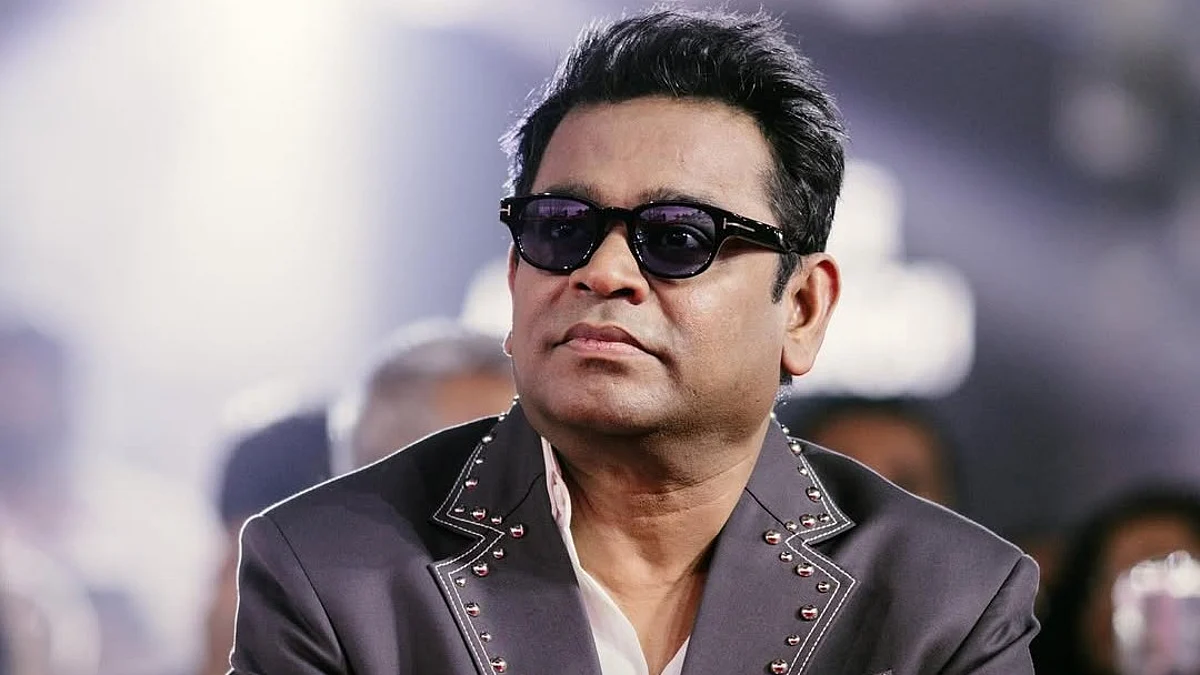
AR Rahman on Losing Bollywood Work for 8 Years: ‘Non-Creative People Have the Power Now’
Oscar-winning composer AR Rahman has candidly spoken about a noticeable slowdown in his Bollywood career over the past eight years, attributing it to shifting power dynamics within the Hindi film industry and, possibly, to indirect communal or regional biases. Despite the change, the global music icon says he remains at peace, choosing creative sincerity over chasing trends or projects.
‘A Power Shift Has Happened’
In a recent conversation with BBC Asian Network, Rahman reflected on how decision-making in Bollywood has evolved since around 2018. According to him, creative authority has increasingly moved away from composers and directors to corporate entities and music labels.
“Maybe in the past eight years, because a power shift has happened and people who are not creative have the power now,” Rahman said, adding that he often hears about missed opportunities indirectly.
“It comes to me as Chinese whispers — that they booked you, but the music company went ahead and hired their five composers.”
While he acknowledged that the reasons could include a “communal thing,” Rahman stressed that nothing has ever been said to him directly. “It’s not in my face,” he clarified.
Choosing Peace Over the Rat Race
Despite fewer Bollywood projects, Rahman said he has consciously chosen not to chase work.
“I am not in search of work. I want work to come to me — the sincerity of my work should earn things,” he said, calling it a “jinx” to aggressively pursue projects.
Taking the situation in stride, the composer added with characteristic calm, “I said, ‘Oh, that’s great. Rest for me. I can chill out with my family.’ Whatever I deserve, I get.”
Feeling Like an Outsider in Hindi Cinema
Rahman also revisited his early years in Bollywood, admitting that despite delivering landmark albums like Roja (1991), Bombay (1995), and Dil Se.. (1998), he continued to feel like an outsider for a long time.
“Actually, I was still an outsider with these three films,” he said.
It was Subhash Ghai’s Taal (1999) that changed everything.
“Taal became a household album. It entered the kitchens of everybody’s house,” Rahman recalled, noting how its blend of Punjabi, Hindi, and folk influences helped him connect deeply with North Indian audiences.
Learning Languages to Belong
Rahman revealed that his acceptance in Bollywood wasn’t driven by music alone. Coming from a Tamil background, he initially struggled with Hindi. Encouraged by Subhash Ghai to learn the language for longevity in the industry, Rahman went a step further.
“I decided to learn Urdu, which is the mother of Hindi music of the 60s and 70s,” he said.
He later picked up Punjabi as well, influenced by frequent collaborations with singer Sukhwinder Singh — a partnership that produced iconic songs like Chaiyya Chaiyya, Ramta Jogi, and the Oscar-winning Jai Ho.
On Prejudice and Industry Politics
When asked whether prejudice exists in Bollywood against outsiders or non-Maharashtrian artists, Rahman said he never felt it directly, especially in the 1990s.
“Maybe God concealed all this stuff from me,” he reflected.
However, he acknowledged that things feel different today.
“People who are not creative have the power now to decide things,” he reiterated, adding that while divisiveness exists, audiences are intelligent enough to see through manipulation.
“People have an internal conscience. They know what the truth is and what manipulation is,” he said.
Work Front: Global Collaborations Continue
While Bollywood work may have slowed, Rahman remains creatively active on a global scale. His most recent Hindi film release was Aanand L. Rai’s Tere Ishk Mein, starring Dhanush and Kriti Sanon, which released on November 28, 2025.
He is also collaborating with Hans Zimmer on Nitesh Tiwari’s ambitious Ramayana, starring Ranbir Kapoor, Sai Pallavi, Yash, Sunny Deol, and Ravi Dubey — a project Rahman describes as a powerful symbol of artistic unity.
“Hans Zimmer is Jewish, I am Muslim, and the Ramayana is Hindu,” Rahman said. “This is India to the world, with love.”
‘I Am at Peace’
At 58, AR Rahman says he has reached a point where external validation no longer defines him.
“I am careful about the projects I choose,” he said, adding that he avoids films made with “bad intentions.”
Even as debates around Bollywood’s changing ecosystem continue, Rahman remains grounded in his philosophy — letting music, sincerity, and time speak for themselves.