Celebs
Zeenat Aman Revisits Dostana and Teesri Aankh, Calls Out Bollywood’s ‘Ludicrous Idea of Romance’

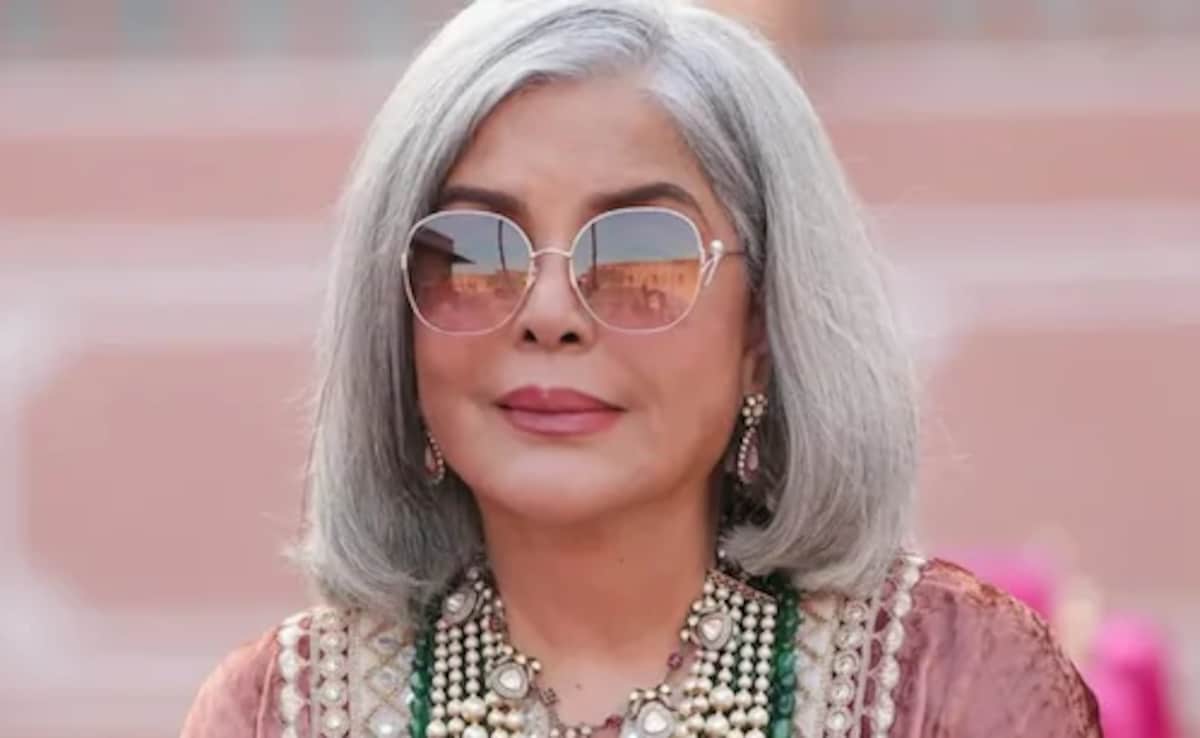
Veteran actor Zeenat Aman is looking back at her celebrated filmography with a sharp, contemporary lens—and in the process, igniting an important conversation about how Hindi cinema has historically portrayed romance, consent and gender dynamics.
Through an ongoing Instagram series, the 74-year-old actor has been revisiting scenes from her films of the 1970s and 80s, critically examining how mainstream Bollywood often normalised moral policing, obsessive pursuit and boundary-crossing behaviour in the name of love.
Rewatching Dostana: Empowerment Undercut by Moral Policing
In one of her recent posts, Zeenat shared a clip from Dostana (1980), in which her character Sheetal drags an eve-teaser to the police station. While the scene initially appears empowering, it quickly shifts tone when Amitabh Bachchan’s Inspector Vijay delivers a lecture on how women should dress—implicitly suggesting responsibility lies with them.
Addressing women viewers directly, Zeenat wrote that such scenes often evoke mixed emotions: satisfaction at seeing harassment confronted, followed by frustration at the condescending moralising that follows. “That opinion and tone were par for the course back in the day,” she noted, adding that women were subtly made to feel responsible for the attention they received.
She also reflected on how audience reactions have evolved.
“Back in the day, your average woman would think Vijay to be a mighty upstanding gentleman,” she wrote.
When she showed the same clip to a younger viewer, the response was blunt: “What a loser.” Zeenat called the shift encouraging. “Oh, I am glad you’re annoyed. That’s what’s changed.”
Teesri Aankh and a Gender Flip That Still Misses the Mark
In another post, Zeenat revisited Teesri Aankh (1982), co-starring Dharmendra, where her character Barkha aggressively pursues his character Ashok, repeatedly ignoring his discomfort. While the scene presents a rare role reversal—placing the woman as the aggressor—Zeenat was clear that it was not progressive.
“Did things really change quite that radically for Hindi cinema heroines in the two short years between the two films?” she asked, answering her own question with skepticism. While the reversal may feel “delightful” to some viewers, she stressed that discomfort and boundary violations remain problematic, regardless of gender. “I can’t endorse Barkha’s approach, just as I couldn’t endorse Inspector Vijay’s,” she wrote.
‘Too Many Films Glorify Obsession’
At the heart of Zeenat Aman’s reflection is a broader critique of Bollywood’s long-standing romance tropes. “Banter and mischief are excellent tools of courtship, but our industry sometimes took these to the extreme,” she observed. “Too many of our films glorify obsession and limerence instead of portraying real, healthy love.”
In a moment of striking self-awareness, Zeenat acknowledged her own role in shaping these narratives. She admitted that her films contributed to what she described as the “ludicrous idea of romance” that Bollywood exported to generations of viewers in India and abroad.
“This is my small attempt to address it,” she wrote, adding firmly: “When it comes to relationships, consent is non-negotiable and respect has to flow both ways. Believe me, I learnt this the hard way.”
Why These Portrayals Matter
Experts say Zeenat’s reflections highlight how repeated portrayals in cinema can shape social norms. Psychotherapist Sonal Khangarot noted that when films frame obsessive pursuit or moral policing as romantic, they subtly normalise unhealthy dynamics. Over time, this blurs the line between intensity and intimacy, control and care.
Unlearning these internalised ideas, she explained, begins with recognising discomfort, questioning long-held beliefs about romance, and learning to assert boundaries—steps that are especially crucial for audiences raised on such narratives.
A Voice That Still Sparks Conversation
Zeenat Aman’s candid introspection has resonated strongly with audiences, many of whom praised her honesty and willingness to critique her own legacy. The discussion also underscores how far conversations around consent and gender sensitivity have come—and how necessary it remains to keep revisiting the stories that shaped popular culture.
On the professional front, Zeenat recently returned to screens with a supporting role in Netflix’s The Royals, earning acclaim for her presence and gravitas. She will next be seen in Bun Tikki, directed by Faraz Arif Ansari and co-starring Abhay Deol and Shabana Azmi.
Decades after redefining glamour and independence on screen, Zeenat Aman is now redefining something else—how cinema remembers, re-examines and learns from its past.