Celebs
AR Rahman’s ‘Communal Bias’ Remark Divides Bollywood

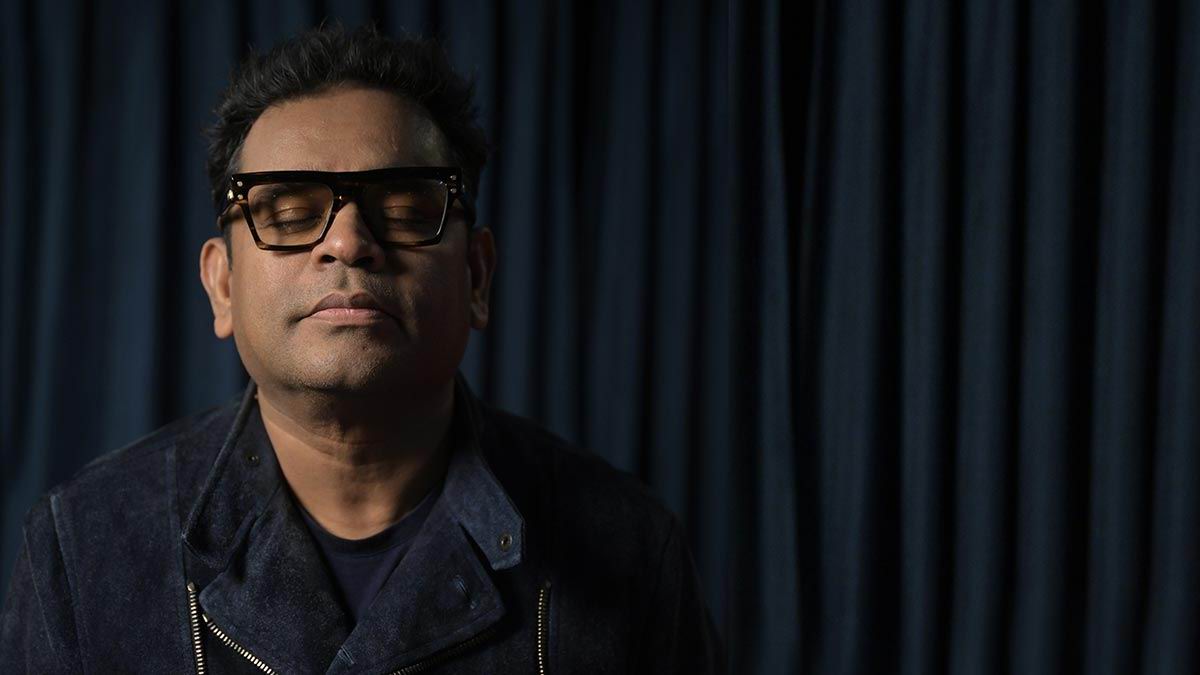
Oscar-winning composer A.R. Rahman’s remarks about a possible “communal” shift in Bollywood have triggered one of the most intense debates the Hindi film industry has seen in recent years. From veteran lyricist Javed Akhtar to political leaders like Mehbooba Mufti, the controversy has drawn responses cutting across cinema, music, and politics, exposing deep fault lines over power, creativity, and representation in the industry.
What Did AR Rahman Say?
In a recent interview with BBC Asian Network, A.R. Rahman revealed that he has been receiving significantly less work in Bollywood over the past eight years. While clarifying that discrimination was never overt, Rahman pointed to changing power dynamics, corporate control, and hinted that it “might be a communal thing also”, adding that such information often reaches him through “Chinese whispers.”
Rahman also remarked that non-creative corporate forces now control key decisions, leading to multi-composer albums and sidelining veteran artists.
Javed Akhtar Rejects ‘Communal Bollywood’ Claim
Veteran poet and lyricist Javed Akhtar, a longtime collaborator of Rahman, strongly disagreed with the composer’s assessment. Calling Bollywood historically religion-agnostic, Akhtar said talent—not faith—has always determined opportunity in the film industry.
Recalling his own journey, Akhtar pointed out that despite being an atheist from a Communist family perceived as Muslim, he wrote some of Hindi cinema’s most iconic devotional songs, including “O Paalanhaare” (Lagaan) and “Pal Pal Hai Bhaari” (Swades)—a Ramleela song written from Sita’s perspective.
“I can write Ram and Krishna aartis. That culture came naturally to us. It wasn’t a big deal then,”
Akhtar said, reminiscing about the Ganga-Jamuni tehzeeb of Lucknow.
He further suggested that Rahman’s reduced visibility could be due to awe and intimidation, saying producers may hesitate to approach a figure of Rahman’s stature.
Shobhaa De Calls Rahman’s Statement ‘Dangerous’
Author and columnist Shobhaa De echoed Akhtar’s sentiment, calling Rahman’s comment “very dangerous.” Speaking at the Jaipur Literature Festival 2026, De stated:
“If there is one place free of communal tension, it is Bollywood. If you have talent, you will get work.”
Singer Shaan also denied the existence of any communal bias, stating that fluctuating work opportunities are part of every artist’s career.
Industry Voices Rally Behind Rahman
Despite criticism, several prominent voices came out in support of Rahman.
- Varun Grover, National Award-winning lyricist and filmmaker, condemned the online abuse Rahman faced, calling it a reaction to his “lived experience.”
- Paresh Rawal reposted Rahman’s clarification, calling him “our pride.”
- Filmmaker Rahul Dholakia urged people to respect Rahman even if they disagreed with him.
- Singer Chinmayi Sripaada defended Rahman against social media attacks questioning his patriotism, pointing out his consistent performances of “Maa Tujhe Salaam.”
- Singer Hariharan acknowledged Rahman’s concerns, noting that corporate decision-making has created a grey area where creativity often takes a backseat to profit.
AR Rahman Issues Clarification
Following the backlash, Rahman released a video statement on Instagram, reaffirming his deep connection to India.
“India is my inspiration, my teacher, and my home. I never wished to cause pain,” he said.
He highlighted his recent work mentoring young musicians, collaborating with Naga artists, building India’s first multicultural virtual band, and scoring Ramayana alongside Hans Zimmer.
Daughters Khatija and Raheema Rahman Show Support
Rahman’s daughters Khatija and Raheema Rahman publicly backed him by resharing an open letter from Malayalam composer Kailas Menon, who urged critics to “disagree, but don’t disgrace.” Menon condemned the personal abuse Rahman faced and defended his right to express personal experiences.
Political Reaction: Mehbooba Mufti Weighs In
Former Jammu and Kashmir Chief Minister Mehbooba Mufti supported Rahman’s remarks, stating that dismissing such experiences does not erase the realities faced by Indian Muslims.
She also criticised Javed Akhtar, pointing out that his wife Shabana Azmi has previously spoken about being denied housing because of her religion.
A Counter View: Is Rahman Also Responsible for His Decline?
Amid the debate, a strong opinion piece argued that Rahman’s post-2015 Bollywood output has been inconsistent, citing albums like Mohenjo Daro, Heropanti 2, and 99 Songs as evidence of creative decline. While acknowledging systemic issues in Bollywood, the critique suggested Rahman’s selective engagement and weaker Hindi projects may have contributed to his reduced presence—especially when contrasted with his acclaimed South Indian work like Ponniyin Selvan I & II.
What Lies Ahead for AR Rahman?
Despite the controversy, Rahman remains one of India’s most influential composers, with major projects lined up including Ramayana, Lahore 1947, and Hansal Mehta’s Gandhi, all slated for 2026.
Conclusion
The AR Rahman controversy has evolved beyond a single interview into a broader conversation about creativity vs corporatisation, lived experience vs perception, and whether Bollywood truly remains immune to societal divides. As reactions continue to pour in, one thing is clear: the debate has forced the industry to introspect—perhaps uncomfortably—about how power, access, and voice function in today’s Bollywood.