News
India Eyes Oscar Glory in 2026 as Kantara: Chapter 1, Tanvi The Great Join Best Picture Contenders

Indian cinema is no longer knocking on Hollywood’s doors—it is walking in with confidence.
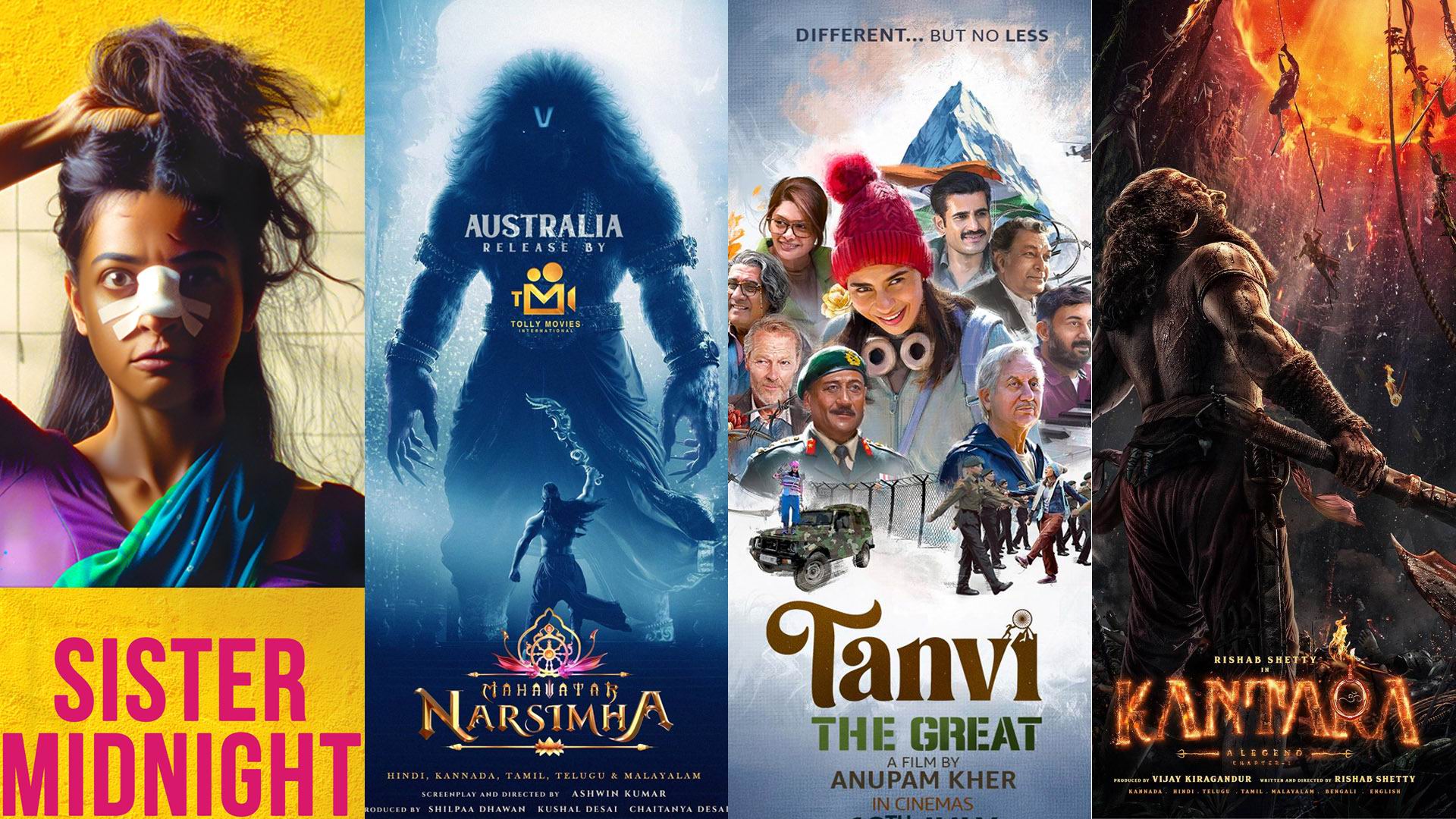
As the Academy of Motion Picture Arts and Sciences unveiled its eligibility list for the 98th Academy Awards, several Indian films emerged as serious contenders, signalling a defining moment for the country’s global cinematic ambitions. Among the 201 feature films eligible for consideration in the coveted Best Picture category are Kantara: A Legend – Chapter 1, Tanvi The Great, Mahavatar Narasimha, and Tourist Family, underscoring the growing diversity and creative strength of Indian storytelling.
At the forefront is Rishab Shetty’s Kantara: Chapter 1, a film deeply rooted in faith, folklore, and the soil of Tulunadu. More than just a box-office juggernaut—having crossed ₹850 crore worldwide—the film represents a bold assertion that culturally specific stories can carry universal emotional weight. Shetty’s portrayal of Berme, the guardian of sacred land and tradition, has resonated far beyond regional boundaries, making the film one of India’s most compelling global offerings in recent years.
Equally striking is Mahavatar Narasimha, the animated mythological epic that has rewritten the rules for Indian animation. As the highest-grossing animated Indian film in history, the Hombale Films production blends spiritual gravitas with technical ambition, challenging long-held perceptions of animation as a lesser cinematic form. Its Oscar eligibility marks a symbolic breakthrough for Indian mythological narratives on the world stage.
On a more intimate yet no less powerful note, Anupam Kher’s Tanvi The Great brings emotional nuance to the race. The film, which marks Kher’s return to direction after more than two decades, follows a young woman with autism determined to honour her late army father’s legacy. Anchored by a sensitive performance from debutante Shubhangi Dutt, the film has been widely praised for its empathy, restraint, and emotional honesty—qualities that often resonate strongly with Academy voters.
Tamil debut Tourist Family and UK-India co-production Sister Midnight, starring Radhika Apte, further expand India’s footprint on the eligibility list, reinforcing the idea that Indian cinema in 2025–26 is not defined by a single language, genre, or scale.
To reach this stage, the films cleared rigorous Academy benchmarks, including qualifying theatrical runs across major U.S. markets, compliance with inclusion standards, and submission of the confidential Representation and Inclusion Standards Entry (RAISE) form. Yet eligibility, while significant, is only the beginning. The final nominations—set to be announced on January 22, 2026—will ultimately depend on the Academy’s voting process.
Meanwhile, Neeraj Ghaywan’s Homebound, India’s official Oscar submission this year, has already secured a spot on the International Feature Film shortlist, adding further momentum to what is shaping up to be a landmark year.
Whether or not nominations follow, one thing is clear: Indian cinema is asserting itself with conviction, range, and cultural confidence. From folklore and faith to animation and deeply personal human stories, India’s Oscar push in 2026 feels less like a hopeful experiment—and more like a statement of arrival.